
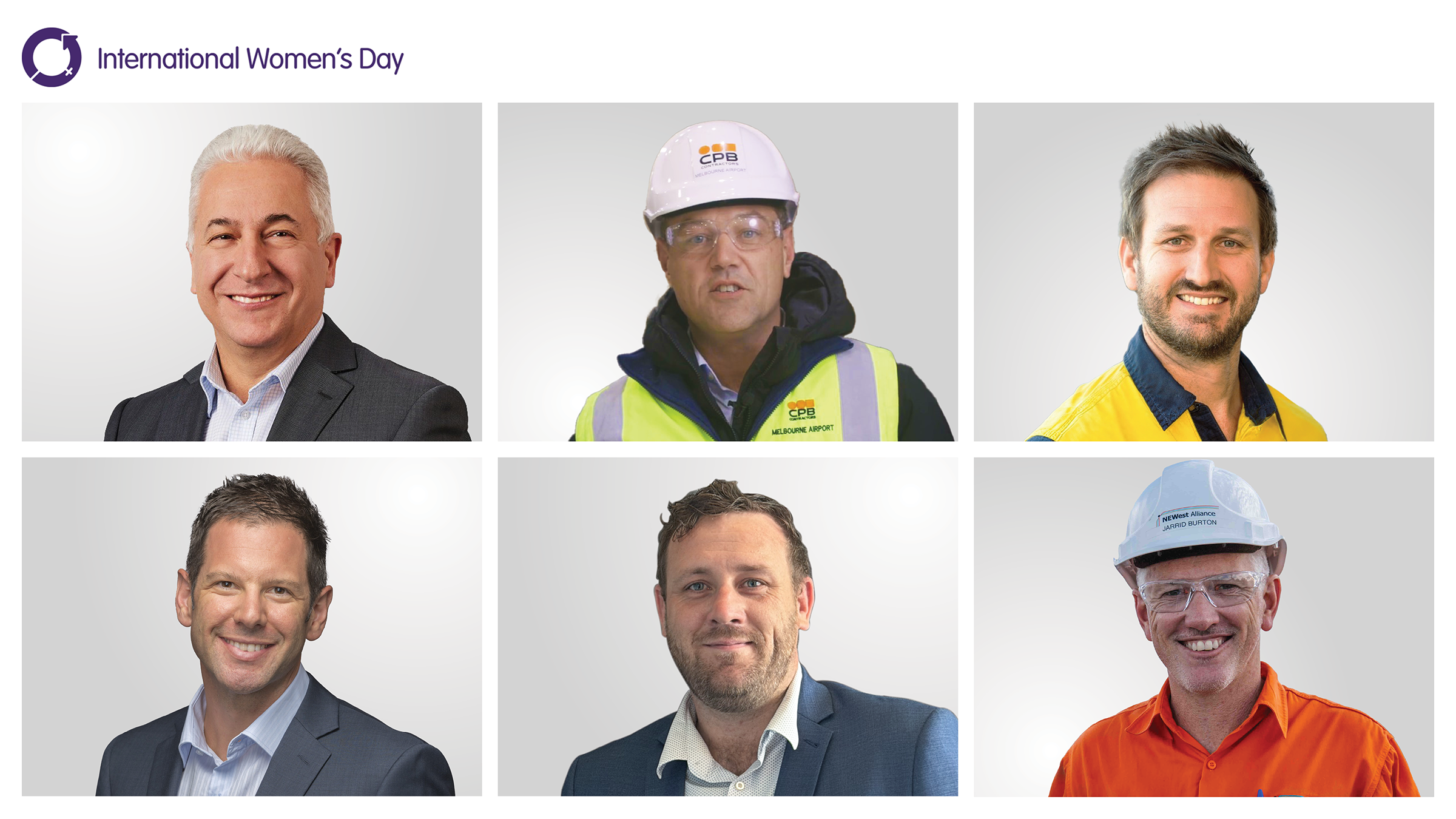
Rob Monaci, Executive General Manager (NSW and ACT)
Christian Byrne, Project Director
Dave Newman, Stakeholder and Community Relations Manager
Dean Anderson, Senior Project Manager
Jarrid Burton, Senior Project Manager
Simon Albery, Head of Safety Operations / Head of Quality & Completions (Interim)
What does ‘balance the scales’ mean to you in construction?
Dave: For me, balancing the scales is about creating environments where everyone has a fair shot and where diverse talent is recognised and developed.
Christian: It’s about removing the barriers that never should have been there in the first place.
Rob: It means pay equity for women and men in the same roles and equal women representation at all levels of the organisation.
Jarrid: For me it starts with creating a workplace where everyone feels comfortable being themselves. From there it’s about attracting and retaining women by showing there is a clear career pathway that can work alongside their life plans. It also means ensuring high-performing women have pathways into more senior positions.
Simon: It’s about creating an environment where positive behaviours thrive and everyone has equal opportunity to plan, lead and deliver work safely and effectively.
What’s one small action you take on site or in the office to support inclusion?
Christian: I try to make a conscious effort to ensure every voice is heard. If someone is interrupted or overlooked, I try to bring the conversation back to them.
Dave: I make sure credit is given where it is due and that everyone has space to contribute.
Dean: I try to broaden our everyday conversations - anything that gives more people an entry point. It’s a small action, but it’s a signal that everyone belongs in the conversation.
Jarrid: Taking the time to build rapport shows people that they’re valued. One small example was a morning meeting that clashed with school drop-off times. When it was raised, the meeting was pushed back slightly and attendance improved.
Simon: I treat everyone equally and make a conscious effort to ensure women in a room of men are not interrupted, overlooked, or have their ideas or contributions attributed to someone else.
What unique value do women bring to your site or office?
Rob: Diversity, be that women or ethnicity, brings value by diversity of thought, different views. Innovation and solutions mostly come from synergy of discussions, and hence diversity is important to capturing alternate views.
Dave: Women bring different lived experiences, which strengthens problem solving and decision making.
Christian: I’ve seen female team members create safer, more collaborative site environments.
Jarrid: Everyone brings different strengths to the table. The value of greater diversity is that it creates space for new ideas, more balanced decision-making and ultimately better outcomes.
Simon: Different perspectives, creativity and balance when approaching problems that may otherwise be solved in more traditional ways.
If we get the balance right, what will the construction industry look like in 10 years?
Dave: We will see more women in trade, engineering and senior delivery roles.
Rob: It will be a stronger industry without a 'blokey' reputation which better represents our community.
Christian: Recruitment won’t feel like a battle to “attract women,” because the industry will be known as a place where women can build long, successful, respected careers.
Dean: A better-balanced industry will have a stronger culture, and young women will see construction as a real career of choice.
Jarrid: Women will be recognised for their capability, experience and leadership – not because of their gender, but because they’re the right people for the role.
Simon: A culture where gender balance attracts and supports a diverse workforce, creating more inclusive teams and positive behaviours that help projects plan, collaborate and deliver successfully.
What can men do to make opportunities – projects, training, leadership roles – genuinely accessible?
Dave: Men need to be intentional. Challenge biased comments or behaviours, even when they seem minor.
Dean: Identify talent early, invest in their development, and deliberately structure teams so emerging leaders—especially men—work under strong women leaders.
Christian: Make sure development opportunities aren’t being unconsciously channelled toward people who “look like us.”
Simon: Share information openly and remain aware of biases that may unintentionally influence decisions around opportunity, selection or inclusion.
What advice do you have for other men wanting to be better allies?
Rob: Start with one woman. Mentor, support, champion, provide opportunities and then extend to others. You can't eat an elephant whole. You need to take it one bite at a time. It is only fair that our women enjoy our industry just like our men do.
Dave: Speak up when something does not sit right. Allyship is built through consistent, everyday actions.
Christian: Start small, listen more, interrupt less, and pay attention to inequity when it shows up in the room.
Dean: Hold a firm standard: for every shortlist of male candidates, ensure there is equivalent qualified woman being interviewed - 50/50. Not as a tick box exercise, but because you’ve put effort into sourcing and developing talent.
Jarrid: Listen when people are talking to you. Pay attention to the similarities in their experiences and take note of the things that could be improved. Even small changes can make a difference.
Simon: I highly recommend the NAWIC Male Allies Program – not just for leaders, but for everyone across the industry.
What have women you’ve worked with taught you that’s made you a better peer?
Dave: I am fortunate to work alongside strong, driven women who raise the standard every day.
Christian: Women I’ve worked alongside have shown me different ways to approach conflict, communicate expectations, and build relationships on site.
Dean: They’ve shown me that there isn’t just one way to lead or influence.
Rob: Women deserve to be fairly represented at all levels of an organisation and that when they are, we will create a better, more sustainable and attractive industry for future generations.
Jarrid: More than anything, it’s given me a greater awareness of what people may be dealing with outside of work. That perspective helps you approach situations with more understanding and empathy.
Simon: The importance of listening, preparing well, asking thoughtful questions and collaborating effectively.