
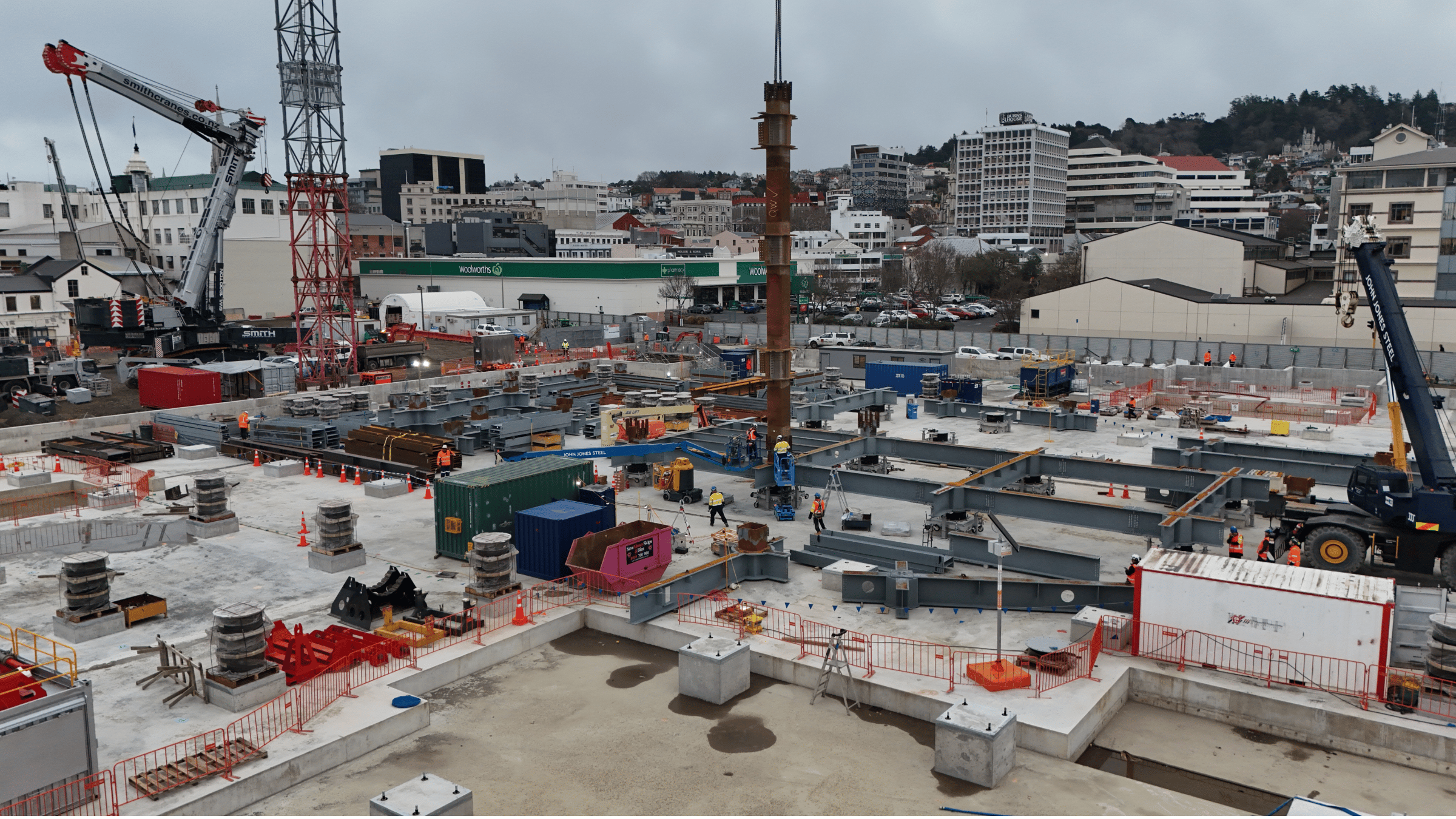
Vertical construction is now underway on the New Dunedin Hospital | Project Whakatuputupu Inpatient Building, with the first structural steel installed on Wednesday, marking the start of the inpatient building rising above ground.
Project Director for the Inpatient Building, Tony Lloyd, joined the CPB Contractors project team onsite to celebrate the moment.
Signalling a new chapter for one of New Zealand’s largest and most significant health infrastructure projects, this week’s steel installation provides the first visible indication of the scale and impact of the future hospital.
Over the past few months, CPB Contractors has completed major site works and foundations on the former Cadbury site to create the platform for vertical construction. Over the coming months, the building will begin to transform the Dunedin skyline as its structure takes shape.
Once complete, the 72,000-square-metre inpatient building will be the largest component of the New Dunedin Hospital project and will deliver modern, purpose-built healthcare facilities for generations to come. The facility will include an expanded emergency department, operating theatre suite, short-stay surgical unit, intensive care unit, high dependency beds and inpatient wards. An overhead bridge spanning St Andrew Street will connect the inpatient building with the outpatient facility which will open later this year, creating an integrated healthcare campus.
More than 11,000 tonnes of structural steel will be transported to site throughout construction, with approximately 550 truckloads arriving by road and sea freight.
With much of the steel manufactured in New Zealand by Christchurch and Auckland businesses, DH Steel and John Jones Steel, CPB Contractors Project Manager Jason Tutty said the milestone reflects the project's commitment to supporting domestic industry and supply chains.
“This project is about much more than constructing a world-class healthcare facility. From the outset, we have been focused on maximising opportunities for local businesses to support the creation of meaningful employment and workforce development.
“The significant amount of New Zealand-manufactured steel being used on this project is a strong example of that commitment in action. As we move into the next phase of construction, we’ll continue our focus on delivering economic and social benefits alongside this important piece of health infrastructure.”
The scale of the project is reflected in the steel package alone, which has required an estimated 330,000 fabrication hours. More than 15,200 individual steel components will ultimately be erected as part of the build.
Three tower cranes will support the next phase of construction, lifting structural steel and major building elements into place as the hospital continues to rise.