
Article by Chris Sheedy, as published by Engineers Australia on 1 May 2026
On one of Australia’s most complex road projects, engineers have a single chance each year to compress three months of work into one.
During the Christmas/New Year period on the Warringah Freeway Upgrade project – broadly considered the most complex brownfield road project ever attempted in Australia – traffic volumes drop by around 30% from Boxing Day through to the end of the Australia Day weekend.
The “shutdown” period offers the project team, a joint venture between CPB Contractors, a CIMIC Group company and DT Infrastructure, a Gamuda company, a rare opportunity to accelerate their program of works in what, for the rest of the year, is an almost impossibly restrictive construction environment.
“There is nothing complex about what we’re building in the corridor, that’s not where the challenge comes from,” Project Director Steven Clark said. “Where it is located, that is another stratosphere in terms of challenge.”
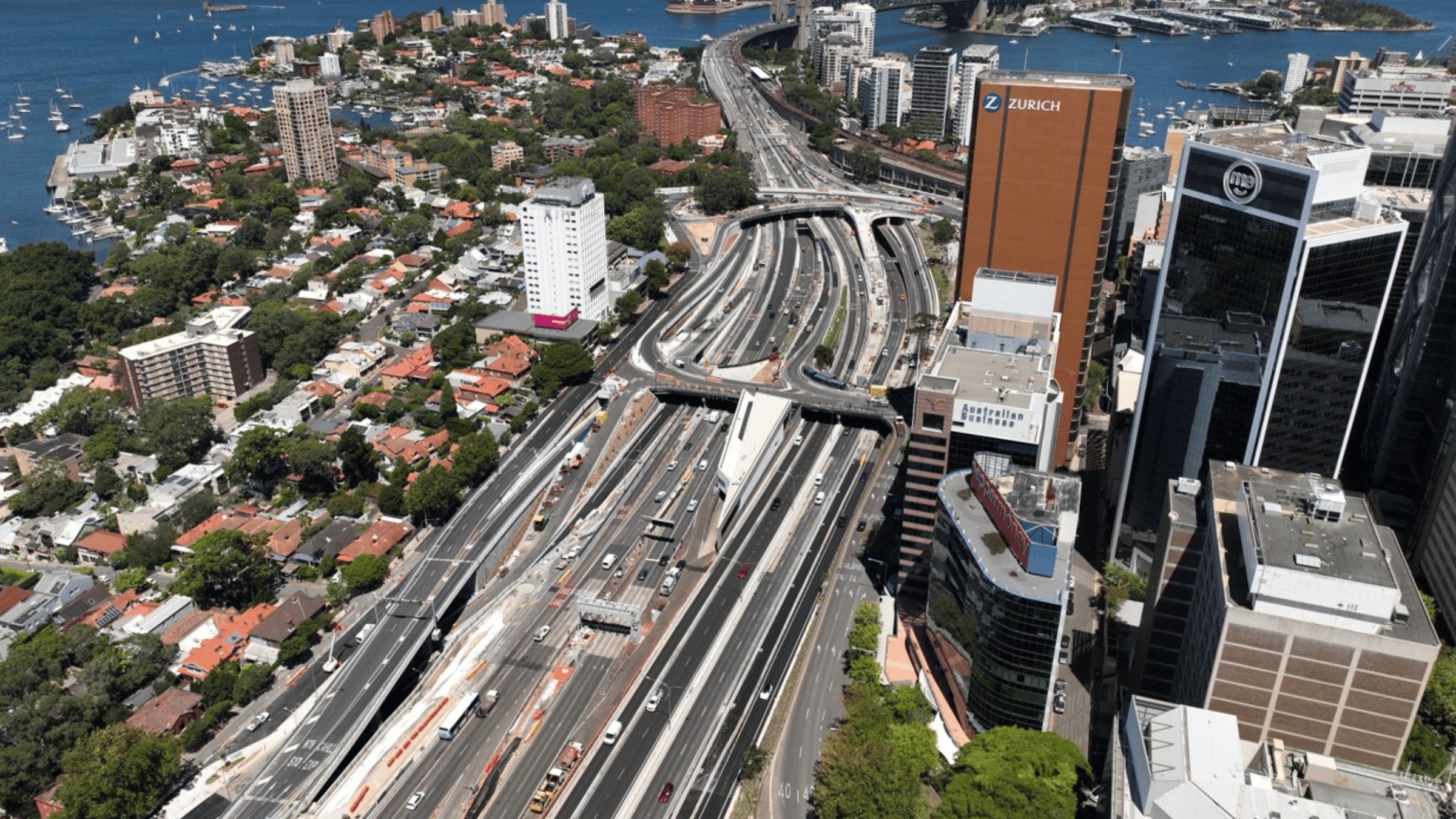
Where is it located? The Warringah Freeway Upgrade is being executed in a road corridor just over four kilometres in length, through which over 250,000 vehicles daily negotiate 26 entry and exit points along a collective 80 kilometres of lanes that weave together to guide drivers to and from the northern side of the Sydney Harbour Bridge and Harbour Tunnel.
Hemmed in by 43,000 nearby residents, engineers managing the project utilise the one-month period each year to temporarily close key parts of the network. These closures are carefully staged and timed to avoid peak periods, ensuring the network never stops.
What makes the effort remarkable is not just access, but output.
“We can genuinely say we did three months of work in one month, during the shutdown period this year,” Clark said.
Achieving that level of productivity is not a simple matter of adding more people or machinery. It is instead the result of a highly engineered and deeply planned system that is developed long before the work begins.
Conducting an orchestra of road movements
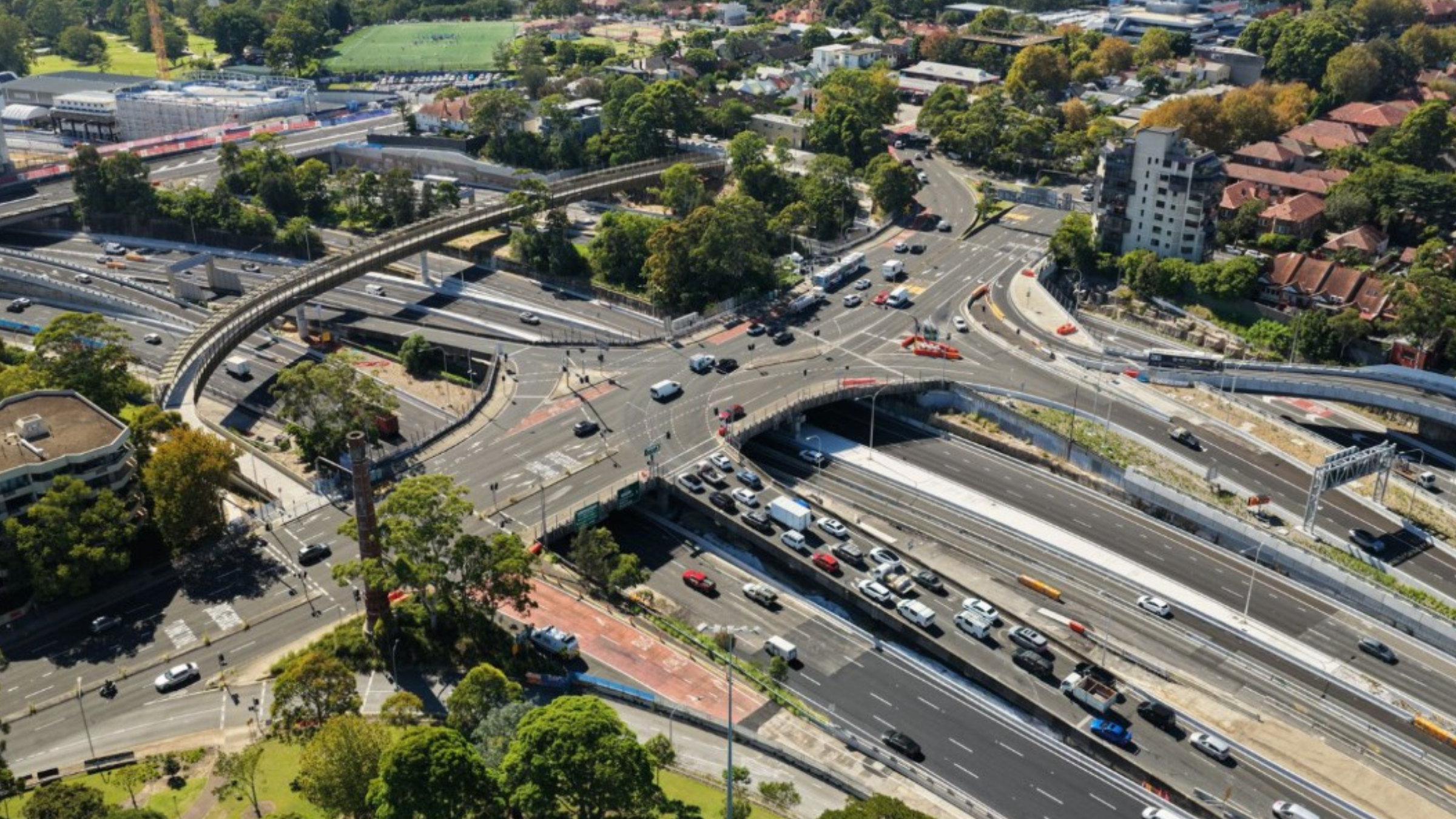
The scope and scale of coordination of road movements during the shutdown period is immense.
Outside of this period, across the broader project, the planning of traffic management involves arranging around 850 road occupancy licenses (ROLs) each month. Each ROL, approved through Transport for NSW, represents a discrete occupation of the live road network.
During the Christmas/New Year holiday period, however, “we activated 1320 ROLs, meaning we got on the road and got off the road that many times over that 30 days,” Clark said. “That is absolutely unheard of in the scheme of what we do within our industry.”
Each movement, often overnight, must be precisely timed and sequenced with full reinstatement required before the start of morning peak hours.
Various advanced technologies, including digital engineering platforms and moveable median barrier systems for lane control, have come into play. They enable the planning and dynamic reallocation of road space to maintain traffic flow around the major works.
That technology has also meant Clark and his team can communicate clearly with the 43,000 residents affected by the project, offering them greater certainty around what to expect during various stages of the build.
Drawing a clear picture for residents
The project’s GIS and modelling capabilities have been pushed beyond traditional engineering applications into stakeholder engagement.
“We’ve generated a really innovative tool where, within our 3D model, we can show a resident what they will see outside their window at any stage of construction,” Clark said.
That capability enables engineers to communicate not just what will be built, but what will be seen and experienced throughout the build.
Despite the scale of the shutdown work, the project recorded minimal complaints during that period, a result Clark says comes down to communication and consistent delivery but most of all the rapport the team has developed with the community over many years.
Designing for temporary states of construction
“Within the period, we’re just executing the plan,” Clark said.
“The engineering challenge is developing a design that you can implement in accordance with the constraints of such a challenging environment. Only on applying a balanced approach to address the many constraints and often competing interests can a plan then be developed.”
That design process is driven in a large part by the almost endless series of constraints. Traffic flow must be maintained at the same time that noise is managed. Strict working hour limits must be observed as construction is carried out in a live traffic corridor already packed with infrastructure.
Under environmental approvals, the project was limited to just 10 nights of work per month outside standard hours, typically defined as 7am to 6pm for weekdays. During major shutdown periods the concept of standard hours are revisited to take advantage of lower traffic volumes, this requires a detailed submission to the EPA.
“What we’re doing, where we’re doing it, how loud it is, when can we start and when do we have to finish is a daily thought process,” Clark said.
Then, of course, there’s the planning of the construction work itself.
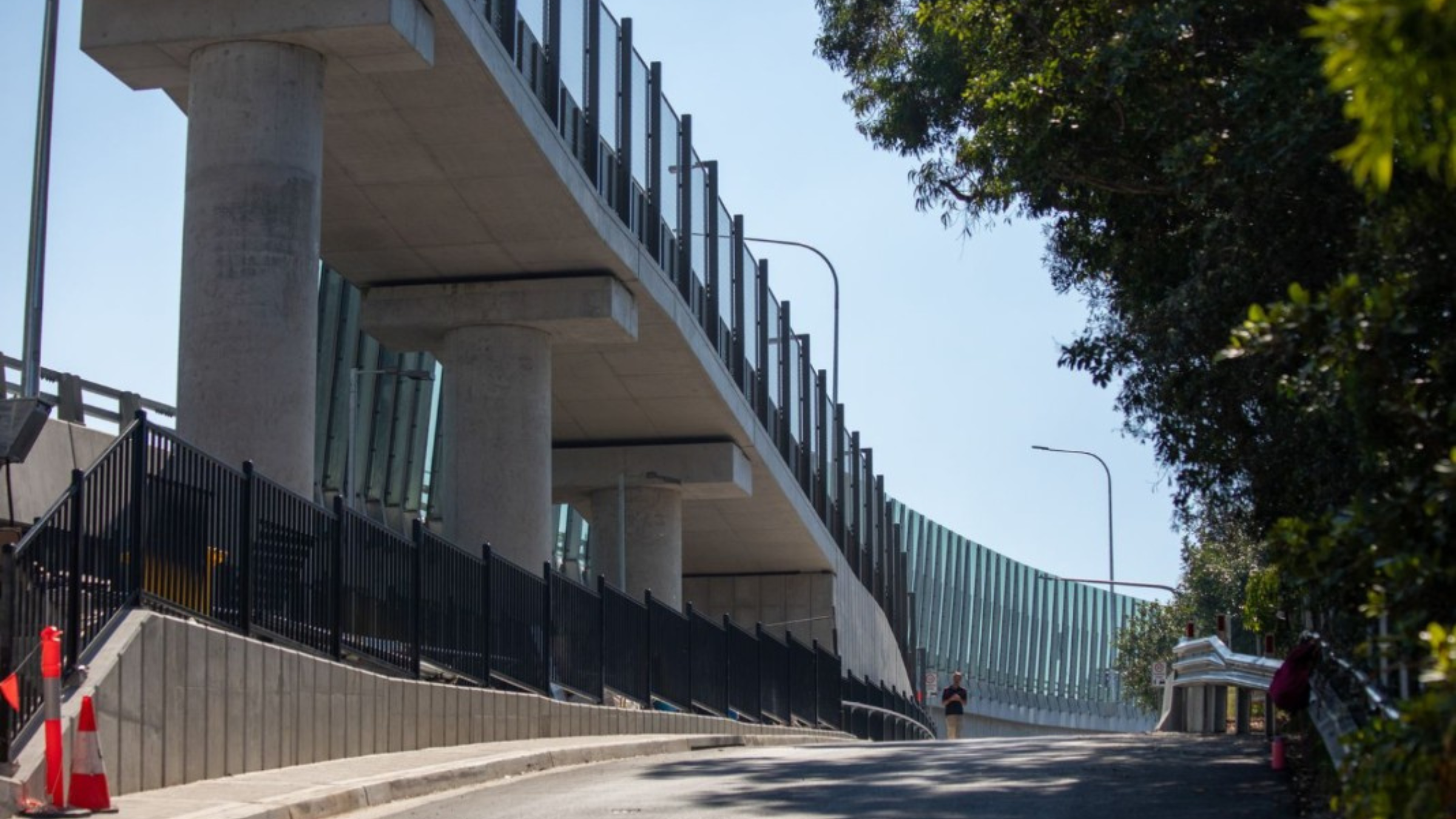
“If we have a retaining wall where we will have vehicles driving adjacent to the top and at the bottom of the wall while we’re building it, that wall needs to be a particular structure type,” he said. “But you can only know what that structure type can be after assessing and modelling the constraints of the site.”
Across the project, and particularly during the shutdown period, this has led to a design philosophy in which construction methodology is a primary driver. The team is designing not just the final asset, but a sequence of temporary states required to build it safely and efficiently within a live network.
Three months of work in four weeks is evidence of what can be achieved despite massive and multiple constraints, when various engineering disciplines – including structural design, traffic engineering, construction planning, digital modelling and stakeholder engagement – are brought into play, Clark says.
“We’ve been tasked to build something new in a footprint that still needs to function,” he said. “It’s a complex road project in an extraordinarily complicated environment, and I’m very proud of what we have delivered, so far.”